A Journey Through the Sky and the Stars
Montevideo Planetarium
Agrim. Germán Barbato
3275 Rivera Ave
Phone: [598 2] 1950 8550
[Official Website]
The beauty of the stars is there, in the sky, waiting to be discovered, not just by bohemians, poets, and romantics, nor only by mathematicians, physicists, and chemists. The splendor of the universe, our celestial heritage, is a landscape for everyone to enjoy. In this sense, and although it’s a trend that has been gradually consolidating, more and more people are embracing astrotourism.
Considered both a recreational and scientific activity, astrotourism, or astronomical tourism, highlights the value of various natural, cultural, scenic, and heritage elements related to the science that studies celestial bodies: planets, satellites, comets, stars, and so on. It is an activity that can take place in indoor locations, such as observatories and planetariums, or in open-air spaces free from light pollution.
In the latter case, Uruguay boasts several spots that stand out for the quality of their clear, unpolluted night skies. These locations, while already renowned for their natural appeal, might not have been considered by certain audiences if not for their astronomical potential. Places like Cabo Polonio, Rocha Lagoon, and Villa Serrana are emblematic tourist destinations that can now also be explored through the lens of astronomy, thanks to their clear, star-filled night skies.
International organizations are increasingly working to protect the night sky and promote it as a human right. Astrotourism serves as a powerful tool to strengthen other important areas, such as sustainable rural development, by revaluing these places as sites of scientific, cultural, and environmental heritage, and as economic drivers through star tourism.
From Villa Dolores to the Universe
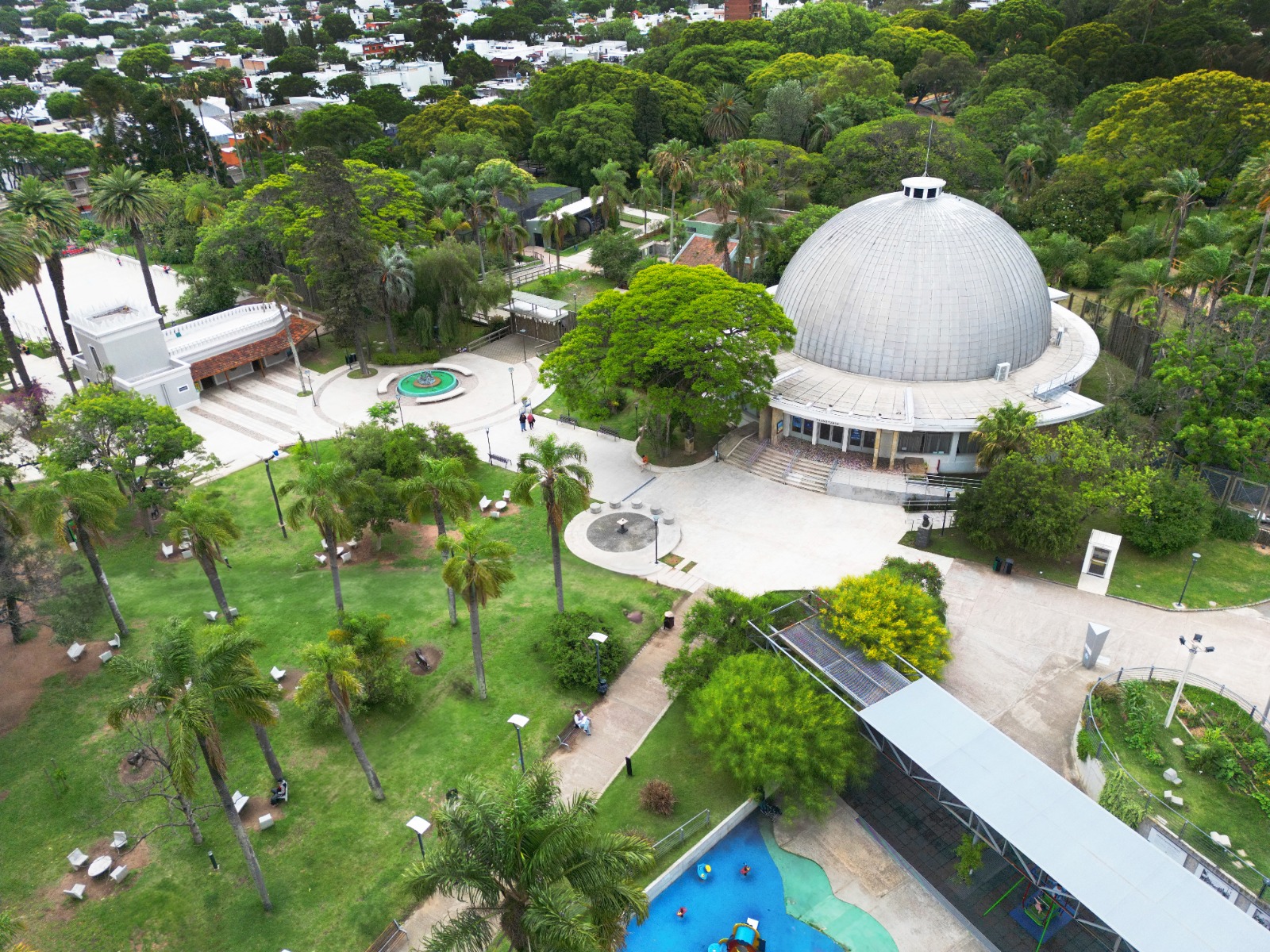
On the other hand, in the case of indoor venues, Montevideo has had a next-generation planetarium since the end of December 2019. After nearly three years of renovations, and with the support of French company RSA Cosmos, the historic building dedicated to scientific outreach, originally opened in 1955 as the first planetarium in Ibero-America, once again opened its doors.
Named after Surveyor Germán Barbato, the new Montevideo Planetarium features a cutting-edge aluminum dome for projection, six laser projectors, fifteen computers, and software especially designed to display immersive astronomical images.
It is also worth noting that the new planetarium will be integrated into an eco-park alongside the Friendship Park and the Villa Dolores Zoo. This development includes the construction of a skating rink, restoration of existing structures, the addition of playgrounds, new lighting, and enhancements to the surrounding vegetation.