Belloni: the Sculptor who molded the Uruguayan identity
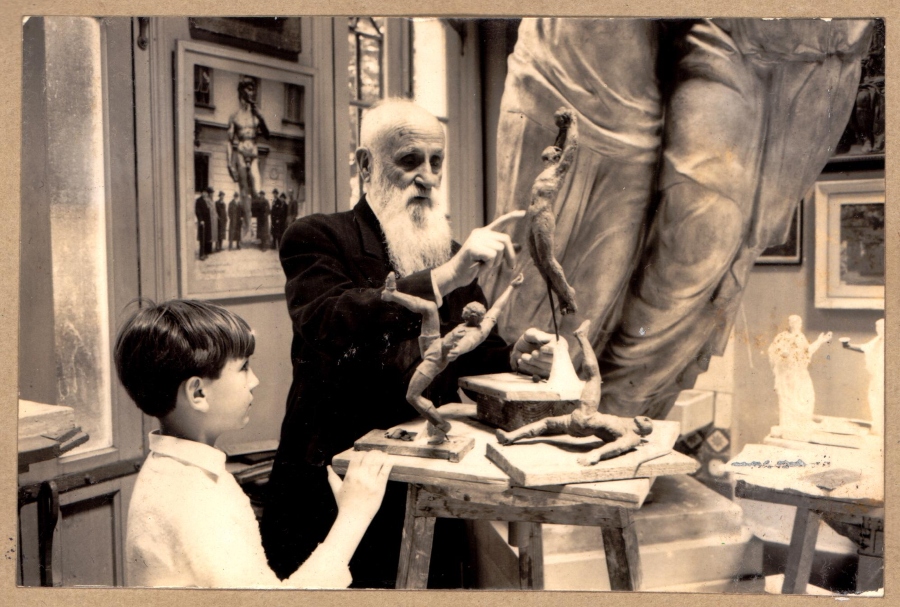
A route consisting of three circuits in Montevideo around José Belloni is incorporated to the Uruguayan cultural tourism offer: one in the Ciudad Vieja neighborhood; another in Paso Molino and Prado; and a third in Tres Cruces, Parque Batlle and Parque Rodó, all emblematic places linked to the artist and sites of historical and tourist interest.

There are three concepts that, in the words of his grandson, José Alverto Belloni, define him as a “deeply conceptual sculptor in thought; naturalist in execution, with a slight tendency towards stylization”.

He generated more than 1,500 sculptures during his lifetime, without counting his paintings and watercolors. The artist’s route will also be designed in other departments of the country and in the future, an international one will be generated, taking into account that his works are present in different parts of the world such as Argentina, Brazil, Switzerland, Italy, Spain, United States, France, among other nations. An example of this is the marble of General Artigas located in the gallery of heroes in Washington, a replica of The Wagon in the White House, among others.

ORIGIN

Son of a Swiss gardener and a Spanish Basque mother, he was born in Uruguay on September 12, 1882 in the country house of the poet Aurelio Berro, in El Paso del Molino, Montevideo, and died in the same city in 1965.

At the age of 8 he traveled with his father Giuseppe to Switzerland. There he trained as an artist where he met his mentor, the sculptor Luigi Vassalli, who guided and trained him in various techniques.

In 1909 he returned to Uruguay to apply for a sculpture scholarship in the old continent, which allowed him to perfect his studies in Europe at the Royal Academy of Munich and later at the School of Fine Arts in Rome. His talent and his studies led him to be distinguished with several awards, he taught classes in molding and his work transcended frontiers.

When his scholarship ended, he returned to Montevideo, where he was appointed by the Commission of the Círculo Fomento de Bellas Artes, to direct the classes of modeling and ornamental drawing, a position he held until 1914, and later he was appointed Director of the same Circle.

SCULPTOR OF THE HOMELAND”

“José Belloni gave back to his people what his people had invested in him through his art. He was the Sculptor of the homeland, but also the artist of class equality and human rights. His legacy represents our identity and our origins as an oriental people.”, he added.

As for his personality, José was a man of “cheerful character, who established a relationship of complicity with his family and grandchildren,” recalls his grandson.

Within his vast work, the monument to “La Carreta”, located in the Batlle y Ordoñez Park, one of the most admirable works of the sculptural genre, which achieved universal fame, as well as “La Diligencia”, located in the Prado, a work of similar characteristics to the previous one, stands out.

The sculpture La Carreta, although its sketch was assembled in miniature in Montevideo, was completed in Florence, Italy, since at that time there were no foundries in all America that allowed the completion of a work of such magnitude, explained his grandson.

He is also the author of some decorative figures in the Salón de los Pasos Perdidos of the Legislative Palace and of the bas-reliefs of the national coat of arms in the antechamber of the Senate Chamber.

The sculptor Belloni believed above all in nature, in the rights of man, in the equality of genders and races, and in a more balanced world between the spiritual and the material. All this he managed to capture in his sculptures, making it difficult to pigeonhole them in the usual trends.

OLD CITY TOUR

1) Montevideo Cathedral (Constitución Square) – In 1947 the artist created the sculptures for the remodeling of the pediment of the Iglesia Matriz, including the 3.50 meter high figures of the Virgin and the Patron Saints of the city (San Felipe and Santiago); the two angels attached to the towers, and the central concrete tympanum, with Jesus and his disciples.

2) Solis Theater (Buenos Aires 678) – Bas-relief commissioned to the artist by the Uruguayan Society of Authors in 1919, in homage to the playwright Florencio Sánchez, consisting of two bronze plaques framed in pink marble, with the icons of “Tragedy” and “Comedy”, located in the lobby of the cultural center.

3) Monument to Juan Manuel Blanes (Buenos Aires between Juncal and Liniers) – Made in 1948, it pays homage to the so-called “Painter of the Uruguayan Homeland”, for representing through his palette the most important acts of the consolidation of the national independence process.

4) Monument to the Baron of Mauá (Rambla Gran Bretaña and Ciudadela) – It is a work of important dimensions in pink granite, in homage to Irineo Evangelista de Souza, relevant financier and Brazilian businessman who acted in Uruguay in the second half of the XIX century. The work is complemented by a bronze bust of the northern sculptor Rodolfo Bernardelli.

5) Monument “El Entrevero” – Juan P. Fabini Square (18 de Julio Avenue between Río Negro and Julio Herrera y Obes) – This work, inaugurated in 1967, after the artist’s death two years earlier, recalls through bronze the combats of our wars of Independence and the civil struggles of Uruguay, paying homage to the humble soldier, defender of an ideal, represented by the gaucho, the black, the white and the Indian.

See the complete Belloni route here!

+ info: www.museobelloni.com/