Un tour de película

Over the past 25 years, Uruguay has positioned itself as a filming location for major international movies and series. Just to give one example, in 2023 alone, over 120 production services were provided for international clients, including content production and advertising, as well as over 50 international co-productions taking place in the country throughout the year.

Uruguay is currently in its prime, offering ideal conditions for any film production: professional talent, infrastructure, eclectic architecture, privileged natural settings, as well as a high quality of life, social stability, and tax incentives for foreign production houses.

There’s nothing like getting to know a destination, its culture, gastronomy, scents, and landscapes in the flesh. Pack up and go on this tour in any order you like.

Three major milestones mark Uruguay’s movie history.

  • The most recent was Juan Bayona’s Society of the Snow, released in December 2023, premiered in movie theaters and streaming on Netflix, on the story of the 1972 Andes plane crash involving a group of Uruguayan rugby players, their relatives, and friends. It became a global hit, both in terms of awards and audience reach, by testing human values and delving into the essence of human behavior.

The feature was set in the Andes, where the real event occurred, and in the landscapes of Sierra Nevada in Granada, Spain. The Uruguayan locations were: the Sierras of Minas, the old Carrasco airport, the Pando air base, rugby fields, Saint John the Baptist’s Church in Pocitos, and residential neighborhoods like Carrasco and Prado.

Walking along the coast of Pocitos and Carrasco, visiting their church and wide parks, as well as the museums and architecture of the Prado area, are among the must-see experiences for any visitor.

  • The second milestone came with the movie Miami Vice by Universal Studios, directed by Michael Mann and starring Colin Farrell in 2005. Part of the film was shot in Atlántida, Canelones, a beach town located 50 km from Montevideo. It was chosen as a location due to its resemblance to Havana, Cuba.

Once in Atlántida, it’s recommended to take coastal walks and swims, and visit El Águila, the most iconic and mysterious building in the city, which numerous legends go around, such as being a Nazi spy observatory, a spot of cosmic energy, or an alchemist’s laboratory. It’s located on the promenade at kilometer 43 of the Interbalnearia Route.

Another must-see is El Planeta, a ship-shaped building located on the promenade and 22th St. A bright example of Art Deco’s nautical trend, it was built between 1937 and 1939 by Neapolitan businessman Natalio Michelizzi. It was the area’s first hotel to offer nearly all modern comforts and hosted public figures like Tomás Berreta, and entertainment personalities such as Luis Sandrini, Mirtha Legrand, Zully Moreno, and other Argentinian movie stars.

On Route 11 stands an architectural gem by Eladio Dieste: the Worker Christ Chapel. Built with an original engineering system earning it recognition as a UNESCO World Heritage Site, the church features astonishing curved brick walls supporting the main nave’s vault with no columns at all.

  • The third milestone dates back to the early 2000s when three films kicked off a new era of national production: “25 Watts”, “En la puta vida” (In This Tricky Life), and “El viaje hacia el mar” (A Trip to the Seaside).

The first took place in the Larrañaga neighborhood, near the current Nuevo Centro Shopping, which today offers shopping and entertainment. You can also visit the adjacent Sculpture Park, a large open-air gallery opened in 1996, designed by architects E. Benech and M. Danza. It features works by artists including M. Pailós, S. Pintos, P. Atchugarry, G. Cabrera, G. Fonseca, M. Lorieto, F. Matto, O. Podestá, J. Abbondanza, E. Silveira, and G. Riva-Zucchelli.
Sociedad de la Nieve, Rambla de Montevideo

The second film was shot in Montevideo and Spain. In the Uruguayan capital, the historic district was the main filming site. The area stands out for its eclectic architecture, combining Art Deco, Neoclassical, Art Nouveau, and Modern styles. Montevideo also boasts a vibrant cultural scene. Its theater listings are remarkably broad and varied, ranging from classic to modern and alternative shows. In its museums, cultural centers, cultural houses, and galleries, you’ll find works by internationally renowned artists such as Juan Manuel Blanes, Rafael Barradas, Pedro Figari, Joaquín Torres García, José Cúneo, and Ignacio Iturria, among many others.

The third film, “El viaje hacia el mar”, is based on a short story by writer Juan José Morosoli from Minas. Published in 1952, the story follows a lottery ticket seller named Siete y Tres Diez.

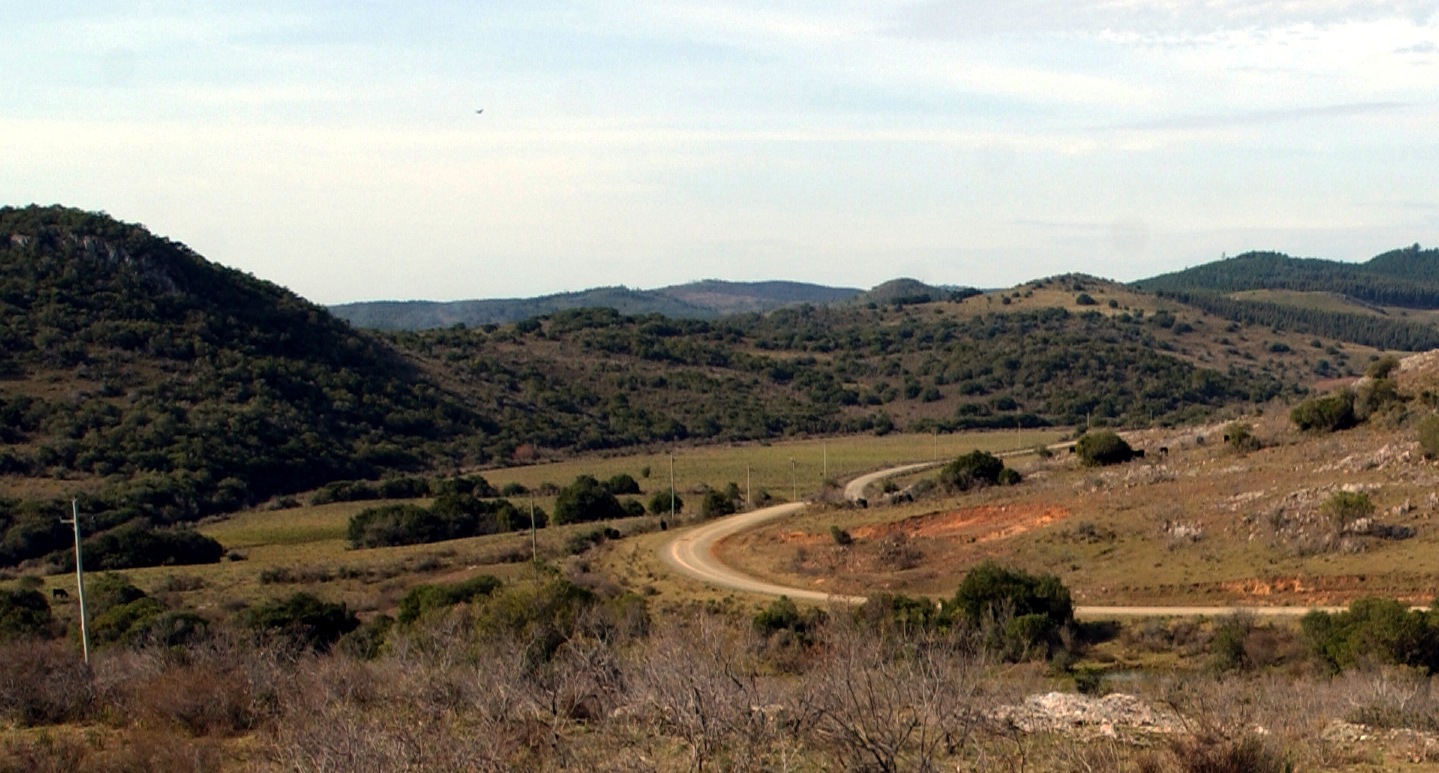
Scenes were shot in the hilly landscapes of Lavalleja and in the towns of Minas and Aiguá, with period reconstructions set in 1963. Beach scenes were shot in the resorts of Atlántida, Costa Azul, and Parque del Plata in the department of Canelones.

If you’re looking to disconnect from daily life, Minas and Aiguá are ideal destinations, surrounded by hilly ranges, lush greenery, and abundant flora and fauna. No long trip is needed to enjoy it. Options include fishing, hang gliding, ziplining, ecotourism trails through dense forests, and river or lagoon boating. Don’t miss the Salto del Penitente Park, the Valley of the Thread of Life, the Salus Nature Reserve, and Arequita Hill. Touring Aiguá’s open-air museum with large murals by local artists could be the cherry on top. For a more spiritual or unique experience, the Buddhist Temple offers a meaningful way to round off your stay in Maldonado.

The beaches of Costa Azul and Parque del Plata offer white sand, stunning sunsets, and tranquility, alongside an active cultural agenda. These are some of the most traditional family resorts along the Costa de Oro.

The hydrographic conditions at the western end of Costa Azul, near its border with Bello Horizonte, make it one of the best fishing spots for croaker on the River Plate coast.

Parque del Plata features approximately four kilometers of beaches known for their wide white dunes and calm waters. The area around the Solís Chico Stream is a favorite for water sports and fishing. At the Solís Promenade, you can admire the sculpture of Sapo Ruperto, the protagonist of beloved Uruguayan children’s stories. Visitors can also enjoy live music and artisan fairs.

Come become the star of your own story and ride on new adventures. Uruguay can’t wait to welcome you!